Saturday, March 18, 2023

STOP! at the SIGN

 
To:
Ontario Ministry of Transport
Ontario Provincial Police
Municipality of Grey Highlands
MPP Grey Bruce

Re: Horse Drawn Passenger Vehicles = Licensing

I live at 307377 Centre Line, Proton - Grey Highlands. This is on the corner of Centre Line (east / west) and SR 41 (north / south). There is a stop sign, both directions, on SR 41, and has been for the 35 years I have owned this home. The clear view along Centre Line is reduced in both directions, from the east by a low rise, the west by the two buildings on the north side (including my own). Centre line is also tree lined through Wareham, mature maples at least a century old.

On Sunday, March 5, a total of * eighteen * horse drawn passenger vehicles were seen to proceed through that stop sign without stopping.

Seven of these were light weight, two passenger open buggies pulled by a single horse. All of these blew through the stop sign at breakneck speed. The remainder eleven were large enclosed ‘family’ containing vehicles, pulled by a pair of horses, which although not capable of same high speeds, also violated the stop sign. In one case two vehicles did this side by side, so one was in the wrong lane entirely as it went through the intersection - as seen in the included photograph (taken from my front entrance).

Other than the difference between single horse buggies and the large enclosed wagons, there is absolutely no way possible to identify the vehicles or their drivers. The wagons are intentionally all identical construction, painted black. The horses show some slight variation, but generally are all black or dark brown. The drivers intentionally wear identical back pants, jackets and hats. Although this is undertaken for ‘cultural / religious’ explanations, the simple fact remains there is absolutely no means what so ever of identifying the law breakers.

There is no possible fiction that these are ‘farm’ vehicles. They are clearly designed for personal transport. In this situation specifically, the transport is being used to move people to and from gatherings at the Mennonite (only) meeting hall located north of this intersection on SR 41.
This situation has been repeated every Sunday since that meeting hall was constructed, typically between 11:45 to 12:15. Any attempt to address this flagrant disregard of the traffic laws made in the past has obviously been completely ineffective.

Local motor vehicle drivers are well aware of the danger created by the careless operation of these wagons on the local roads:
- Launching through stop signs without stopping, including in front of of oncoming traffic.
- Loosing control of the horses entirely (either through poor selection or lack of training for horse or driver).
- Wagons travelling at night with no visible lighting.
- Horses suddenly darting out into the traffic lane, quite unpredictably.
There has been many statements made asking the local motor vehicle to ‘be patient’ and ‘make provisions’ for the inclusion of horse drawn vehicles on the roads. Given the repeated behaviour of these horse drawn vehicles, it is clear where the true responsibility for danger lies

This is a situation that must repeat itself at every stop sign intersection in this local area - and most likely through out the Province. It is only a matter of time before there is a major collision on even this specific intersection. There have been a number of close calls I have observed, where motor vehicles have needed to suddenly brake or in several cases swerve completely around wagons who have not stopped as legally required.

Because there is virtually no method of identifying individual offenders, it is suggested here that it is more than  past time that these * personal * vehicles are required to both register and visibly mount some form of license plate. This is the requirement for other vehicles using the public roadways.

Darrell Markewitz
(address block)


An earier post on the same problem : July 2016 - Red means STOP

 
It is worth noting that I was UNABLE to report this using the OPP on line reports system. 

Any vehicle / road offense requires you to give the LICENSE PLATE.

Pretty much proves the point


Wednesday, March 08, 2023

'What Lies Beneath' - PSSP 2023

Design Rough - What Lies Beneath

 Paisley Street Sculpture Project - 2023

‘What Lies Beneath’


(note that this is a second submission for this years competition)


What gets left behind, buried under our feet? Does the remnants of our modern industrial activities become future archaeological remains?
A large bundle of now distorted pipes and tubes is glimpsed through the gaps of a broken limestone slab shell.

This work is inspired from my continuing interest in archaeology, especially the fragmentary view of past material cultures via the random preservation and recovery of objects. If there is any message, it is subtle : What we bury today will become how the future will see, and likely mis-understand, about us. A jumbled confusion that may not truly represent our lives and aspirations at all.

Description

Detail - forged pipe bundle (Peterson House)
 
The primary elements are forged from steel pipe, some bent and twisted along their length, flared / flattened / curved at their exposed ends. (For an example, see DM-detail.jpg - a similar technique used for an architectural support.) The pipe elements will be painted, most a dull black, but some darkened blue and green. Additional elements will be made of copper water pipe or galvanized electrical conduit, the ends capped with standard joint fittings. Lengths of small steel round rod and copper (gas line) tubing form occasional spiral wraps.
In total this central core forms a cylinder (hollow inside) about  6 1/2 feet long, about 18 inches in diameter.

The outer shell is a series of random size and shape thin limestone slabs. The stone envisioned is a yellowish grey that contains many fossils. (What exactly is used will depend on local availability.)  Each is held in place by short pieces of threaded rod welded to the core, using randomly forge shaped pieces, tapped to create ‘nuts’.  The placement will create many gaps, through which the central core is visible, with the stone standing clear of the core by roughly 3 - 4 inches on the inside
In total the stone results in about 24 - 30 inch outside diameter.

With the existing cut stone base, the total height will be about 8 feet - an imposing structure.

Technical

The central bundle will be solidly welded together and to an internal support composed of heavy angle, allowing for bolting to the existing bases. The use of pipe allows for visual, without massive physical, weight.
The shaped ‘nuts’ will allow the individual stone pieces to be attached on site, after the core bundle is in place. The threaded rods (two per stone for all but the smallest) would be 3/8 diameter, the holes drilled oversize to ease placement.
Although the overall concept would be better expressed if the steel surfaces were allowed to naturally rust, it was decided to use a protective painted coating (industrial enamel over primer) on all the the steel pieces. This primarily to avoid any possible rust stain damage to the polished stone base blocks. For this reason, all the top open ends of the pipe elements will be sealed, capped or folded downwards (to prevent rain water penetration to the interiors)

Note that this is a design for a new work, likely only to be produced if accepted.


Artist

Darrell Markewitz started his life long work as an artisan blacksmith as a student at Ontario College of Art in the late 1970’s. He founded his Wareham Forge in 1991, shortly after moving to lower Grey County, as his full time operation. Over the decades he has created practical and decorative objects for sale and on commission, ranging from simple candle holders to major architectural installations. Over the last decade, he has created a number of large objects for inclusion in the sculpture projects in Elora, Halliburton and most recently in Paisley.
see : www.warehamforge.ca

Sunday, March 05, 2023

Seeking a GRANT ?


I am undertaking a major, multi-event trip to Ireland and Scotland for the later part of this summer.
With air fares, local transportation (car hire), lodgings, meals and materials - this is going to be an expensive undertaking. At this point I am committed to the project, since I have already paid for air and booked lodgings in Ireland.
So in aid of this, I have applied to the Canada Council for the Arts, most significantly under The Jean A Chalmers Fund for the Crafts - Project Development and Research. 

There are two primary and two secondary elements :
Caherconnell Furnace Festival, Ireland
Turf to Tools 3, Scotland
and
European Archaeology Assn Conference, Ireland
Ratho Byres Forge, Scotland  

 
• I have missed the Woodford / Caherconnell event every year since it's inception in 2019. First because of a conflicting project (that was cancelled at the very last minute), following years due to COVID travel restrictions / concerns.
• Turf to Tools was started in 2014, continued in 2016, originally at the Scottish Sculpture Workshop. Due to the current situation at SSW, the final stage (object to deposit) will be mounted on Skye, still working with Eden Jolly.
• I have submitted a paper / presentation for EAA-13, which due to the raw costs of 5 days in Belfast, will be as a video / ZOOM remote.
• Since I will have to fly out of Edinburgh, I want to make a workshop / studio visit to Shona Johnson & Pete Hill, who I have worked with on other projects (notably Ypres 1919-2019)

The following is the submitted project description and supporting images :


Project Description

- Travel from rural Grey County to Toronto - air to Dublin, Ireland, public transport to rural Co. Clare.
a) Caherconnell Furnace Festival,
(lodgings and meals provided)
b) European Archaeology Assn Conference.
 required lodgings with internet for presentation day, meals
- Travel to Dublin, required overnight hotel, air to Edinburgh, car hire to rural Portree on Skye, meals.
c) Turf 2 Tools 3
 materials, lodgings and meals.
- Return to Edinburgh, required lodgings, meals
d) Workshop visit to Ratho Byres Forge in Edinburgh
- Connecting air - Dublin to Toronto, return to home.

Event Descriptions

a) Caherconnell
A gathering of Irish, UK, and European artisan blacksmiths working with bloomery iron. The direct objective is to share and further develop working skills with self made bloomery iron with other artisans. Includes demonstration / public involvement aspect.
b) EAA23
A presentation describing the interface within the ongoing Turf to Tools’ project between traditional skills, contemporary crafts, public demonstration, with archaeological research (confirms March 24).
c) Turf to Tools 3, originally conceived as a collaborative project between international artists, writers and archaeologists, ‘from the land - return to the land’, at the Scottish Sculpture Workshop (2014, 2016). This last phase undertakes the creation of a replica historic object from bloomery iron made earlier, then ceremonially depositing it into a peat bog. (Negotiations with local arts organizations ongoing.)
d) Ratho Byres Forge is one of the few architectural blacksmith’s shops in Scotland, specializing in public artwork installations.

Impact - Personal

a) Caherconnell
Direct experience with distinctively Irish traditional bloomery iron smelting methods. Introduce Canadian perspective on process, extended to finished objects. I will be the first Canadian to attend this event.
b) EAA23
Further enhance the contribution of experienced artisans to archaeological research, particularly via public demonstration of ancient / traditional techniques. I consider myself a bridge between the maker and the researcher related to bloomery iron.
c) Turf 2 Tools 3
Completion of this project, where I was the team lead.
Continue and further develop the association between Canadian and Scottish artisan metalworkers.
d) Ratho Byres
I had worked with Shonna Johnson and Pete Hill as part of the build team for their panel for the Ypres 1916-2016 (Belgium) memorial, one of about a dozen Canadians participating. Over the last decade I have increasingly been creating public sculptures, so observation of their working methods and insights will be invaluable.

Impact - Canada

- Bloomery Iron is a unique material, with properties quite different from modern industrial alloys. I remain only of only three working artisans exploring the possibilities, certainly the one with the longest direct experience. As one of the instigators of the ‘Early Iron’ movement in North America, I was instrumental in re-discovering predictable methods allowing the creation of bloomery iron, techniques which now have become widely used.
- All elements increase the international recognition of the work and contribution of Canadian artisan blacksmiths. The three main elements include work before larger public audiences.
- I continue to hold workshop sessions from my home studio, transferring hard won knowledge and experience to a new generation of artisan blacksmiths.
- I remain one of the very few bloomery iron makers who publishes working guides, ongoing research and general commentaries on their work. This continues via web site and regular blog postings, journal articles, book chapters and formal lectures.
- Specifically for this project, I intend to document all elements via a dedicated series of illustrated blog postings.
- At the conclusion of Turf to Tools, the formal description started during the earlier elements will be completed, ideally to be submitted as a journal article.

Final Note

Bloomery Iron Smelting has a place in the early history of Canada (Newfoundland c 1000 / Nova Scotia c 1650’s / Quebec c 1650’s + / Ontario c 1812 +) The earliest large commercial operations almost always started with the use of smaller test furnaces similar to the ones illustrated here. Bloomery iron was the primary metal used through the Settlement period, declining with technical innovations after 1855. Although hand forging techniques continue in use by contemporary artisan blacksmiths, all modern work is undertaken using industrial steel alloys.
The question of just how ancient to traditional iron makers created bloomery iron was uncertain at the point I started my own personal research in 2001. There are only three Canadians working consistently with these methods and metal, of which I certainly have the most overall experience. I continue to stress the importance of exploring the methods, and through object, the unique properties of this material, well beyond the principle of ‘sole authorship’.

Images

The images presented here are grouped to show differing aspects both the creation and artistic expression of bloomery iron. As stress is seen on the public demonstration aspect.
01 - 06 : Illustrating the steps of creating ‘bloom to bar’
07 - 09 : Past work showing development of textures, use of antique wrought iron
10 - 12 : Work with bloomery iron, emphasizing the unique textures.
13 : Illustrating work with students (and within the USA)
14 : The first iron smelt in Canada, the Norse circa 1000 AD (where my interest began).
15 – 16 : Work at the Turf to Tools project.

click on any of the images for a larger view
Freeing a Bloom (11/2009)
Extraction - Goderich Celtic (8/2012)
Consolidation - Quad State, Ohio (9/2008)
Splitting - ARTEfakty, Poland (9/2016)
Welding - Bloom 2 Bar (4/2012)
Working Bar - Turf to Tools - Scotland (8/2014)
Segmented Funeral Urn - antique wrought iron, copper / 38 x 23 cm (2008)
Pattern Weld detail - antique wrought iron, steel alloys / about 6 cm wide (2000)
Segmented Bowl #2 - mild steel / 24 x 16 cm (2011)
Bloom Bowl #2 - bloomery iron / 20 x 14 cm (2011)
Bloom Bowl #4 - bloomery iron / 15 x 12 cm (2014)
Hector's Bane - bloomery iron, carbon steel / 26 cm long (2012)
Student Extracts - Brown University, Rhode Island (4/2011)
Norse Iron Smelt at Vinland - L'Anse aux Meadows NHSC, Newfoundland (8/2010)

Compaction, Turf to Tools 2 - Scotland (9/2016)
Turf to Tools Bowl - bloomery iron / about 14 cm (2014)


I had been told by a friend who had served on a jury for the Ontario Arts Council that the first and last images were especially important to be striking. The first to grab their attention (on reviewing so many applications) and the last because it remained on the screen while they discussed your submission. 

This obviously was good advice - as I am two grants out of three past applications at OAC. This is the first time I have attempted a Canada Council / Chalmers submission.

Wish me Luck!

PS: No thanks at all to Blogger / Google for the huge difficulty imposed by their 'simplified' coding system. It took four complete attempts over many hours to end up with the formatting you see here.

Wednesday, March 01, 2023

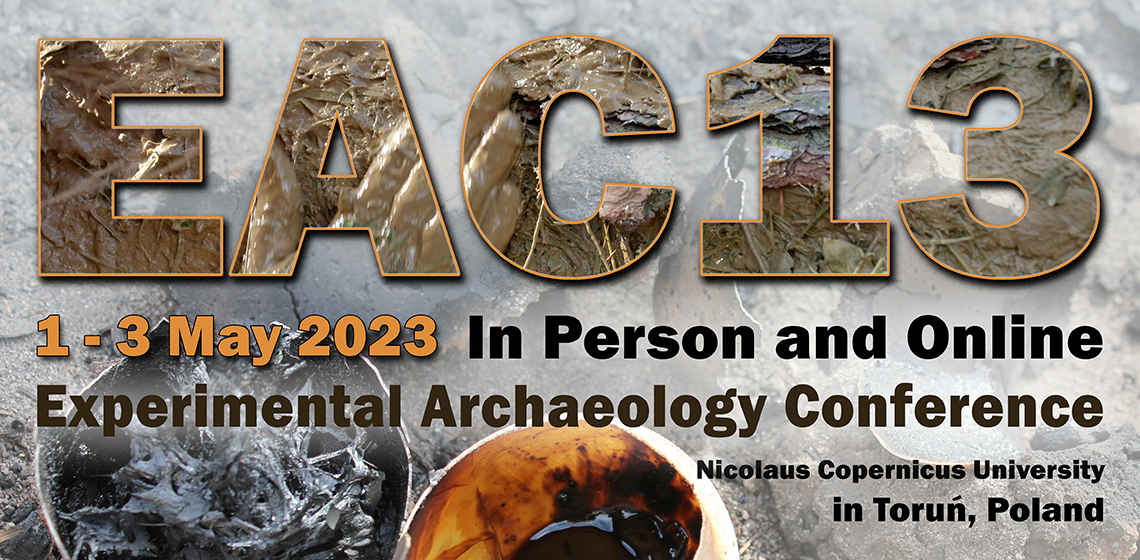
"Look at the BONES!' - presentation at EAC-13


I have submitted and had accepted a presentation (with formal paper to follow) 

for this year's Experimental Archaeology conference, EAC-13

For more information :  https://exarc.net/meetings/eac13/
 
On line viewing of the sessions is FREE
Conference organizers do ask that you do register (also free)


Look at the Bones!” - Adding bone in a 

bloomery iron smelt

A case study of a practical experimental test.


Through 2019, much was made in the popular press suggesting that during the Viking Age, exhumed human bone had been used in the chain of production from iron ore through to finished swords. Contradicting this, considerable experience with small scale direct reduction process bloomery iron smelting furnaces indicated that at least while creating the iron itself, the effect of adding bone would be minimal, if any. To establish what kind of physical traces that might remain if quantities of bone were added during smelting, in June 2020 a full furnace build and firing was undertaken with a range of animal bones added, then the resulting debris field recorded.

The concept, design and implementation of this experiment is discussed, and how limits on methods, instrumentation and analyzing results shaped the final conclusions. This discussion suggests how even a simple experiment, if carefully recorded, can add to the body of available knowledge, and may prove insightful both educators and other investigators.

Paper – presented as video of narrated slides (prepared for internet, Q & A via ZOOM)

Tuesday May 2

Session 9 B 1

16:00 (local) = 10 am EST (Ontario)

Q & A (via Zoom)

17:30 – 18:00 (local) = 11:30 – noon EST


This will be a more formal version of the descriptions posted earlier about this June 2020 experiment - seen on the iron smelting documentation : 

Build and Smelt

Exploration


February 15 - May 15, 2012 : Supported by a Crafts Projects - Creation and Development Grant

COPYRIGHT NOTICE - All posted text and images @ Darrell Markewitz.
No duplication, in whole or in part, is permitted without the author's expressed written permission.
For a detailed copyright statement : go HERE