Monday, April 05, 2021

A set up for what will follow...


The Hitchhiker’s Guide to the Galaxy has this to say about Evolving Technologies :

Anything existing during the first third of your life, is normal and just part of the usual way things work.
Anything invented during the second third of your life, is new and exciting (and something maybe you can get a career in !)
Anything invented during the last third of your life, is disruptive and against the natural order of things. (1)


There is clearly generational thing at work here.

I'm really at core a late 60's kid, and was framed by parents who grew up at the end of the Depression / during the 2nd War. I'm technically the last year of 'post war' (b. 1955), that very real 10 year bulge in births.
If I had taken a very definite fork of choice in 1978, I would have ended up with my own children in the early 1980’s. Which would put them about 40, (and likely also make me a grandfather now).
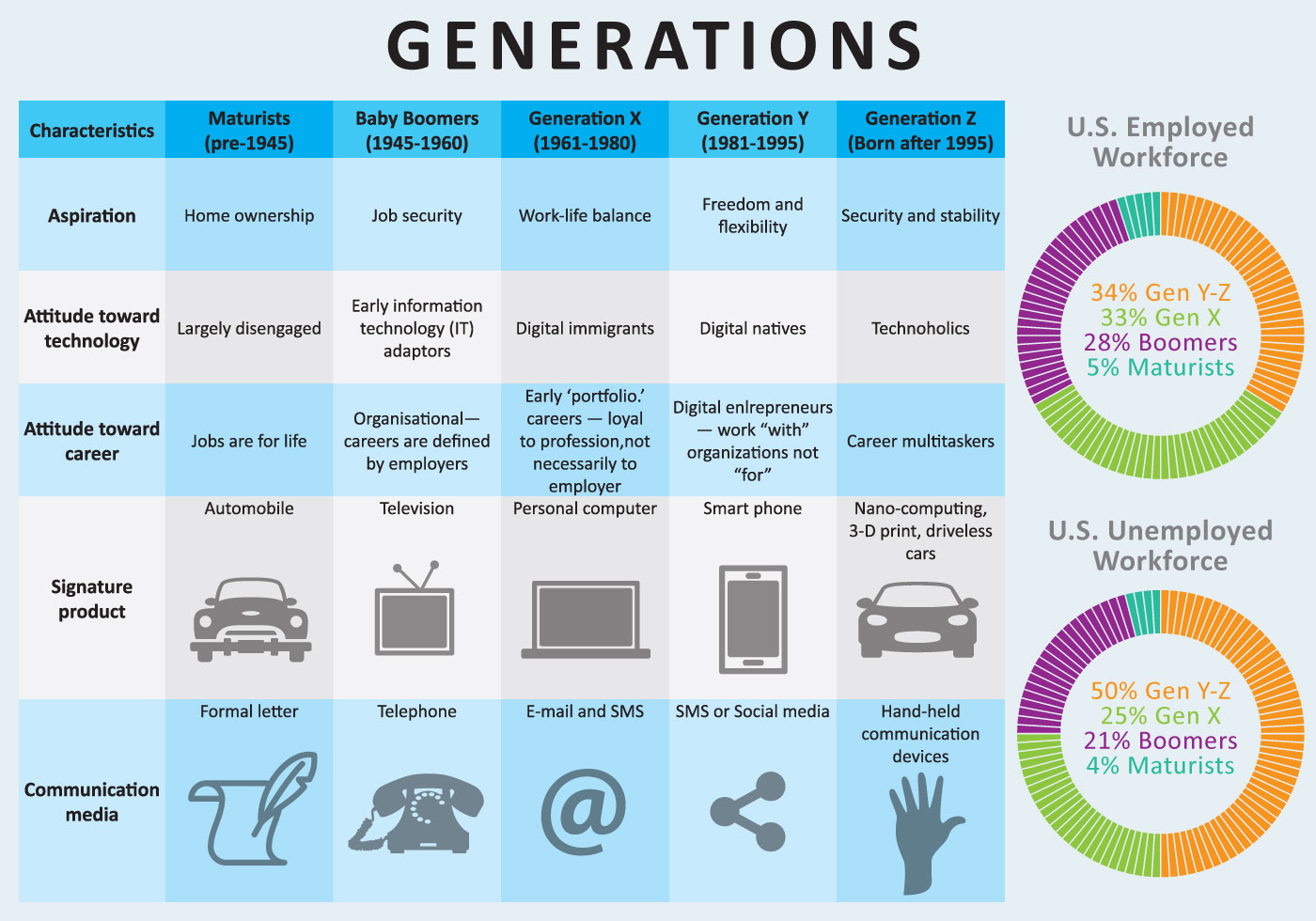
I always considered a 'generation' to be defined by ‘birth to child making’, so at best 20 - 25 years. This has been massively compressed of late, with every cohort passing university age wanting to have their own ‘special and distinctive’ label (2):


I also grew up well below the poverty line. A 'ward of the state' since about 1968 (at 13). Over my entire working life, my very best income year was 1991, when my income was roughly twice that current minimum wage. Since that year, I have never had enough income to put me over the ‘minimum for income tax’ amount. (3) So the escalation of 'consumer culture' has had limited impact on me.
Even television, since in '68 we still owned my parent's roughly 1960 b&w set, which often did not work because of failing tubes (and cost of replacements.) (4)

Different times, different shaping and pressures.

This all is a pre-amble to the next two commentaries I will be posting here.
These are edited versions of a pair of articles I wrote for the Ontario Artisan Blacksmiths Association newsletter, the Iron Trillium (5)

Many readers will find these next two pieces quite opinionated, and certainly I will be expecting ‘younger’ readers (especially Millennials, who have never known a world without ‘smart’ phones) to have quite different viewpoints.


Notes

1) Originally by Douglas Adams - Strongly paraphrased, from memory (!)
I have the original set of 26 BBC radio episodes of Hitchhiker’s Guide stuck inside my iPod, set on random play. (A). This specific reference is buried in there some place. It comes up (unpredictably) every so often.

2) Obviously not so simple. For the background preparation, I found a number of quite different divisions and names being proposed. Some use age blocks, some use events, some define (what they chose) as cultural / attitude descriptions. (So no wonder I can’t keep it straight either.)
https://parentingalpha.com/generation-years-chart-20th-to-21st-century-generations/
image source : https://static.vecteezy.com/system/resources/previews/000/098/290/original/generations-vector.jpg 

3) Ok, I admit that as a self employed artisan I get to deduct a big chunk of expenses most reading do not. About 90 % of vehicle costs are ‘business’ related. The workshop comprises 2/3 of the footage here, so also allows 2/3 of house operation expenses to be deducted.
Balance this against the fact that the first real ‘holiday’ I had from 1989 onwards was only in 2019 (one week in Cuba). Any other trips away from Central Ontario for the last 30 years have been working ‘holidays’, most at least partially paid for by contracts undertaken.

4) Also because of economics and this lack of media exposure, I joined the Canadian Army Reserves in Fall of 1972 - I had never ‘seen the War in my living room’.

5) I serve as Editor for this quarterly. Normally I limit myself to only one ‘editorial’ commentary per issue. I frequently will contributed a second article, normally something related to ironworking history or current project work. This last issue (January - March 2021) I did not receive very many submissions, and so was really short on content.

Notes on the notes

A) This of itself pretty much proves the point. Bias here described:

I did not own a computer until about 1985 (so I would have been 30, just at the cusp of 'the second third') There was no internet at that point. I have twice had to replace computers, not because they failed or did not adequately perform all the tasks I require to run my business, web sites, or research. But because required 'official' internet sites would not accept access from 'older and slower' machines. My current desktop is a Mac Mini, 2014 issue (bought in 2016) working OS 10.10 (top end for that machine). I work a LOT on this machine, normally mornings from (average) 7 am through to lunch time. (see this blog, the web site)

Popular Mp3 players date to roughly the mid 1990’s (I would have been about 35 - ‘in the second third’.) My first player was an off brand, purchased about a decade later (which I never was that happy with). Some point (about 2008?)  I would buy a second hand iPod Shuffle 1 (issued 2005). This was followed by a second hand iPod Mini (issued 2004). I currently have a Shuffle 3 (used, issued 2009) and a Touch 1 (issued 2007, new about 2014). This would place my use of all this still ‘in the second third’. All these replacements were made on the failure of the previous object (not for ‘style’).

I did not own a cellular phone of any kind until after 2005 +. This was certainly just a phone, and was purchased and used for travel emergencies and to call in credit card authorizations at craft shows. Only. (It was never switched on if I was not traveling). I did not purchase a 'smart' phone until about 2015, and even then only because I could no longer buy a replacement battery for that older cell phone (which did everything I needed anyway). I do not have any kind of data plan, and have never used the phone as a teeny tiny replacement for a computer. 

I do have an iPad Mini, (OS 9, about 2016). (This also a generous gift.) It allows me a small 'computer' device when traveling: internet access, work and research images, copies of lectures, and certainly holding book files. It gets used at home primarily for fast internet searches to check facts while watching (previously downloaded) documentaries or films, simple games. 


Thursday, March 25, 2021

EAC12 Experimental Archaeology - A Selection

Monday, March 29, 2021 - Thursday, April 1, 2021
Join the #EAC12 Conference live and for Free

" Attending the #EAC12 Experimental Archaeology world tour online conference is free and open access to all, thanks to our sponsors. You will see over 120 experiments from around the world, in 16 sessions spanning over 4 days (29 March - 1 April). The Conference will be streamed live on YouTube via https://www.youtube.com/c/ExarcNetofficial 

Each 3-hour session has two hours of presentations, followed by a 1 hour of live Q&A where questions from the public are answered.
Besides that, we have a "plus" platform, Discord. Here you can interact with one another in thematic text and audio channels. Follow this link to enter the server: https://discord.gg/MJTUwc8 any time before or during the conference. Once you click, you are prompted to present yourself in 1, 2 sentences and then one of us will let you in. Read more about Discord... "

Please register for free to receive updates about the #EAC12 Conference.

Program Selections


Note : This is just my own personal selection of topics I am interested in!

Papers directly related to Iron Smelting in bold / Presentation times adjusted for EST (Ontario), as pulled off the published schedule : https://exarc.net/meetings/eac12

For all Abstracts see https://exarc.net/meetings/eac12/abstracts

IMPORTANT CORRECTION (AGAIN!)

I messed up on the reporting and converstion!

(March 30) When the schedule was first published, the normal offset from GMT to EST (Ontario) of 5 hours was given here. Then Ontario shifted to Daylight Savings, which through everything out by an hour (less). So I changed the indicated times. Then two weeks later, Europe shifted to DST as well, re-aligning the times back to +5 hours.

ALL TIMES BELOW NOW CORRECT FOR ONTARIO

Monday March 21

11 AM EDT  (London GMT 16:00) - Session 3

#7 : (11:00)
Hotspot Presentation: Experiments in functional Studies. The case of fire-related Experiments
Veerle Rots, Dries Cnuts, Sonja Tomasso
TraceoLab/Prehistory, University of Liège (Belgium)

#8 : (11:00 +)
Paper: 4-Dimensional Recording of Fire related Experiments
Ole Fredrik Unhammer & S.J. Armitage
Centre for early sapiens behaviour (SapienCE), Department of Archaeology, History, Cultural Studies and Religion, University of Bergen (Norway)


15:00 EDT  (London GMT 20:00) - Session 4

#10 (15:00)
Paper: Toxic Taters: how Ethnography, Experimental Archaeology and the modern Kitchen can improve the safety Potatoes
Bill Schindler
Washington College (USA)


#11 : (15:00 +)
Paper: How the Wind Blows: Investigating the Performance of Early Bellows through Experiments
Myriam Legault
Ruhr-Universität Bochum (Germany)

Paper: A lot of Hot Air: Exploring Air Production in Viking Era Bellows
Neil Peterson
Independent Scholar (Canada)

Session 4: Live Questions & Answers
(starting approximately after 2h of broadcasting = 17:00 EDT)


Tuesday 30 March

04:00 EDT (London GMT 09:00) - Session 6

# 16 : (04:00 +)
Paper: Experimental Casting of high-leaded bronze Palstaves in the ATLANTAXES Project
Beatriz Comendador1, Aaron Lackinger1, María G. Faro2, Noemí Silva2, Pau Sureda2 & Xosé-Lois Armada2
1 Grupo de Estudos de Arqueoloxía, Antigüidade e Territorio, Universidade de Vigo (Spain)2 Institute of Heritage Sciences (Incipit - CSIC) (Spain)

#17 : (05:00)
Paper: A House Biography: Building and Burning an Experimental Reconstruction of a Neolithic House
Diederik Pomstra, Annelou van Gijn, Annemieke Verbaas & Leo Wolterbeek


800 EDT (London GMT 13:00) - Session 7

#20 : (09:00 +)
Paper: Arctic Iron Smelting in northernmost Sweden – an Experimental Approach
Carina Bennerhag1,2, Jannica Grimbe1 & Daryoush Tahmasebi1
1 Norrbottens museum (Sweden)
2 Luleå University of Technology (Sweden)


Wednesday March 31

03:00 EDT  (London GMT 08:00) - Session 9

#26 : (03:00)
University of Exeter / Buster Farm Hotspot

Paper: Butser Ancient Farm and Exeter University Collaborative Experiment for Alternative Roofing Materials
Fergus Milton (UK)


#27 : (05:00+)

Paper: Experimental Research and the Archaeological Open-Air Museum: perfect Storm or a perfect Partnership?
Claire Walton
Butser Ancient Farm (UK)


Thursday April 1

00:00 EDT (London GMT 05:00) - Session 13

#37 : (00:00+)
Paper: Investigating the Ancient Heritage of Indian Iron Smelting Technology through Experimental Approach
S. Udayakumar
National Institute of Advanced Studies (NIAS) (India)

04:00 EDT (London GMT 09:00) - Session 14

#41 : (05:00+)
Paper: Roman and Early Medieval Mosaic Beads and Millefiori Canes – the hot Glass Techniques of Manufacture
Sue Heaser (UK)

#42 : (0:600)
Paper: Why Recycle Glass? The Answer is Clear? Experimental Glass Recycling using a Wood-fired Glassworking Furnace
Victoria Lucas
Newcastle University (UK)

08:00 EDT - (London GMT 13:00) Session 15

#43 : (08:00)
DARC Hotspot Presentation


(08:00) Paper: 'Now with 70% less Clay!' Experiments with Viking Age Icelandic Turf walled Iron Smelting Furnaces
Darrell Markewitz1, Kevin Smith2 & Neil Peterson3

1 Independent Researcher, Ontario (Canada)
2 Haffenreffer Museum of Anthropology, Rhode Island (USA)
3 Independent Researcher, Ontario (Canada)

Paper: Stone Soup: Experiments in Soapstone Cookware in a Norse Context
Richard Schweitzer & Sarah Scroggie
Dark Ages Recreation Company (Canada)

Paper: Increasing the Effectiveness of the Bloomery Smelting Process by using a mobile Furnace Shaft. Archaeological Experiments on the possible Reuse of clay Shafts during the early Roman Period in Northern Central Europe
Florian Kobbe2, Christian Helmreich1,2,3, Jan Hinrichs1 & Martin Sauerwein1

Session 15: Live Questions & Answers
(starting approximately after 2h of broadcasting = 10:00 EDT)


As a European based conference, the times for some sessions are not ideal for those of us in North America.

Wednesday, March 24, 2021

Globes (10 lines #1)


The vault was immense, the glow from the individual radiant spheres providing heat and light to each working system, but with only a bit of light extending beyond each into the greater darkness.
There was plenty of space left between each set to keep effects isolated, still more distance dividing the larger clusters of similar prototype layouts.
There were so many variables to test; what energy provided, placement and size of the containments, what combination of chemicals could be combined into each.
It was exacting and patient work, so often ending in less than desirable results.
The Overseer wandered through the complexity of the project, attention drawn to some excitement over at one of the M class experiments.
As was typical, the starting flasks ranged in size, and had been laid out bracketing what was usually considered the ideal light and temperature zone, all rotating and turning at different rates to churn the various chemical mixes.
Of the starting nine globes, there had been three that had looked especially promising, numbers two through four in the series.
The inner most had heated too quickly, resulting in an accelerated growth that had ended in sulfurous contamination and although number four had started well, but something had gone wrong with the containment, leaving the contents too dry, thin and cold.
The developing primary culture in globe three however was reaching it’s absolute peak of perfection, with traces of a subtle smoky component, which if harvested at just the right moment, would ensure it’s appeal to the connoisseur.

Meanwhile, the humans living on Earth, completely unaware of their true role in the larger Universe, blindly continued to burn massive amounts of carbon based fuels, thinking somehow everything would be fine in the end.

 Image taken from the December 2020 issue of Discover


My partner Kelly had passed along an exercise suggested from a creative writing course that a friend was taking. 'The 10 Line Challenge' is to write a short story using only 10 sentences. The piece is formatted here so to make the sentence count clear. This may be cheating just a little, as some of those lines are a wee bit on the long size.

Friday, March 05, 2021

DARC - Hosts at EAC12

2021 March

12th Experimental Archaeology Conference 

#EAC12, World Tour


 the Dark Ages Re-Ceation Company will be hosting one of the many 'hot spot' segments of this virtual conference.

The Dark Ages Recreation Company has developed a well-earned reputation in Canada for mounting high quality living history presentations.  In addition to repeated trips to the 'Vinland' site at L'Anse aux Meadows Newfoundland, DARC has provided living history demonstrations in conjunction with exhibits at museums throughout Ontario and into the United States. This has included presentations in support of both Vikings, North Atlantic Saga and Full Circle, First Contact.

The group focuses on everyday life in Northern Europe at the turn of the first millennium. Individuals portray a selection of working artisans who illustrate the everyday use of personal possessions and the skills used in making these items. Textile workers, bead makers, cooks, musicians, potters, metal and wood workers, all take part in presentations using the format of individual artisans and family units within a seasonal market setting. Beyond the group’s work as demonstrators and interpreters, the desire to acquire some of the original skills and apply these to object creation has led members to solid experimental archaeology in various fields of endeavor, from cooking to gaming strategies, construction of musical instruments, and pole lathe debris.

Some have taken their research to more formal levels, with long-running experiments and academic presentations related to bloomery iron smelting and glass bead production. There are three presentations contributed by members of DARC at EAC12 this year: Darrell Markewitz and Neil Peterson on investigations into Icelandic smelting furnaces,  Neil Peterson on air production in Viking Age bellows; and Richard Schweitzer and Sarah Scroggie on their construction and testing of soapstone cooking pots.

Demonstrating game playing : Canadian Museum of Civilization, 2002

Experimental Iron Smelting : L'Anse aux Meadows HNSC, 2010

Supporting Exhibits : Royal Ontario Museum, 2013

Experimental glass bead making : Upper Canada Village, 2019

Daily Life in the Viking Age : Upper Canada Village, 2018

Overall Camp Presentation : Upper Canada Village 2018

Textiles Work : Upper Canada Village, 2013

 Descriptive text by Diane Harper / with edit


February 15 - May 15, 2012 : Supported by a Crafts Projects - Creation and Development Grant

COPYRIGHT NOTICE - All posted text and images @ Darrell Markewitz.
No duplication, in whole or in part, is permitted without the author's expressed written permission.
For a detailed copyright statement : go HERE